
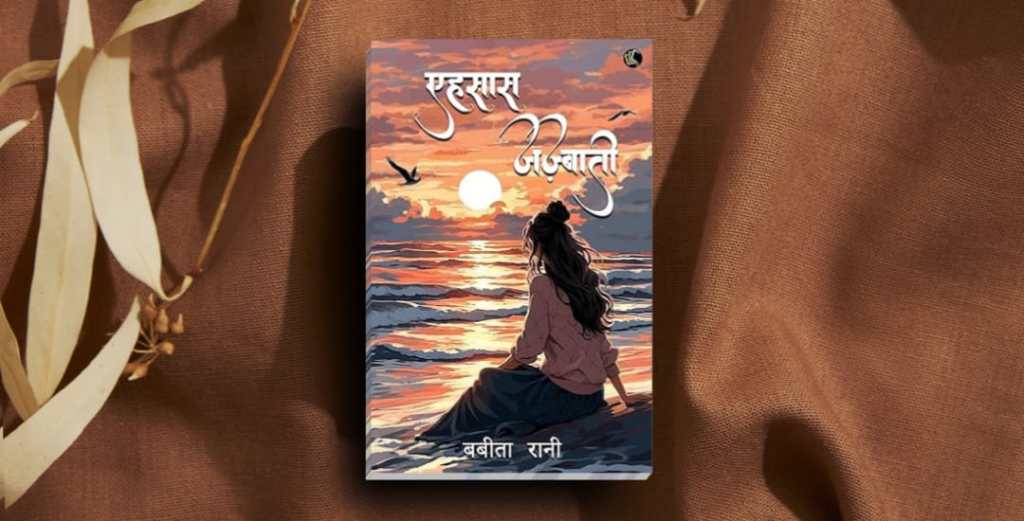
Overview: The Lyrical Anatomy of Melancholy
In her poignant collection Ehsaas Jazbati, North Indian poet Babita Rani navigates the complex architecture of human emotion, striking a delicate balance between aesthetic lyrical beauty and the heavy, profound sense of loss that accompanies the passage of time. The collection is, at its core, a study of melancholia—not as a fleeting mood, but as a persistent state of being that colors the poet’s nostalgic journeys into the “good old days.”
The Thematic Scaffold: Love, Longing, and Departure
The structural integrity of Rani’s work rests upon a scaffold of love, longing, and memories. Her poems function as a shuttle, moving rhythmically between the vanished glory of the past and the “emotional lurch” created by those who have departed. This movement creates a sense of kinetic sadness; the reader is never static, but is instead pulled through the poet’s personal history.
Rani’s exploration of nostalgia is particularly effective because it avoids the traps of sentimentality. Instead, she treats the past as a living entity that continues to demand an emotional tax from the present.
Stylistic Innovation: Ossification and Silent Doors
Two of the most impactful and unique elements within Ehsaas Jazbati are the concepts of the “ossification of pain” and the “silent doors of memories.”
Ossification of Pain: Rani suggests that grief, when held for long enough, becomes structural. It hardens into a skeletal framework upon which the poet’s identity is built. This metaphor elevates the work from simple lamentation to a deeper philosophical inquiry into how suffering defines the human form.
Silent Doors of Memories: This imagery evokes a sense of haunting stillness. These doors are not necessarily locked, but they are heavy, leading to rooms of the mind that the poet enters with a mixture of reverence and dread.
The Dialectic of Suffering and Chirpiness
While the dominant tone of the collection is one of melancholia, a close reading reveals a persistent, underlying yearning for “chirpiness.” This is the “light” the poet seeks—a return to a state of uncomplicated joy that the weight of experience has made difficult to reach. This tension between the darkness of the “emotional lurch” and the desire for life’s former vibrancy provides the book’s narrative drive.
Rani possesses a rare capability: the ability to pen feelings of suffering in words that “neither prick nor soothe.” This neutrality is her greatest strength. By refusing to over-dramatize or falsely comfort, she achieves a universal resonance. Her words simply make sense, acting as a mirror for anyone who has experienced the bittersweet burden of memory.
Conclusion: Ehsaas Jazbati is an absolute masterpiece of contemporary Indian poetry. Babita Rani has successfully translated her life experiences into a brilliant exploration of pain. It is a book that understands the weight of the past but continues to reach for the chirpiness of the present, making it an essential read for those who seek to understand the “brilliance of pain” through a lyrical lens.
Categories: Reviews


 The Asian Review