

There is something quietly radical about standing in the Cour de l’Hôtel de Ville de Bruxelles and holding up your phone to find a sculpture blooming in the air before you. No […]

There is something quietly radical about standing in the Cour de l’Hôtel de Ville de Bruxelles and holding up your phone to find a sculpture blooming in the air before you. No […]

In her poignant collection Ehsaas Jazbati, North Indian poet Babita Rani navigates the complex architecture of human emotion, striking a delicate balance between aesthetic lyrical beauty and the heavy, profound sense of loss that accompanies the passage of time.
After five years and 85,000 daily readers, The Asian Review strips away all images, adopts black-on-cream minimalism, and mandates 900-word minimums. Our globally trademarked black logo signals permanence: we’re desensitising readers from image-focused clicking, resensitising them to sustained thought. Not algorithm-chasing, but resistance training for attention itself. Literary culture demands depth.
Harvey’s Booker-winning novella transcends plot, offering sixteen hypnotic orbits of Earth through astronauts’ eyes. Like Virginia Woolf in space, it’s a philosophical meditation where perspective shifts like Las Meninas—challenging, beautiful, rewarding rereads. In 136 pages, Harvey captures humanity’s cosmic insignificance and profound meaning simultaneously. Utterly transcendent.
Writers finish a draft and believe they see their work clearly. They don’t. Months spent inside a narrative create blindness to its faults. An editor arrives with fresh eyes and finds what […]
10:52Paul Lynch’s Booker Prize-winning Prophet Song is a literary gut-punch that transforms contemporary Dublin into a totalitarian nightmare. This isn’t escapist fiction—it’s a mirror held up to our fragile democracies, asking the most terrifying question: how would you know when it’s time to leave?
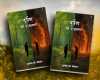
Darpan: Khud Se Mulakat emerges as a profound exploration of the self and the world. The title, which translates to “Mirror: An Encounter with Oneself,” serves as a literal and metaphorical gateway into the poet’s psyche.

IndiGo’s catastrophic meltdown has devastated India’s literary festival season. International authors stranded for days in chaotic airports, keynote speeches cancelled, cross-border dialogues destroyed. Over 1,000 flights grounded—not by technology, but by shocking mismanagement and greed. India’s cultural reputation lies in ruins as the world’s writers witness our aviation nightmare firsthand.

When this opportunity to visit Belgium came along, I couldn’t think of a better adventure than to make this ‘pilgrimage’ to Geel. It didn’t matter that I couldn’t enter the church since it was closed for the winter because what I came to see was on the outside – the bas-relief depicting the beheading of Dymphna. Wouldn’t it have been more apt if Damon was holding the chopped-off head of Dymphna? Just saying…
You see, sometime in 2010 (I think – I forget, now), an agent had accepted the manuscript for The Age of Smiling Secrets and we signed a contract. When publishers were keen-but-not-keen, I suggested we stop submitting and consider reworking the novel. A few days after Christmas 2012, I received an email that shocked me to the core. Let me set the scene for you.
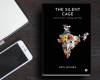
Arti Mishra’s new book, ‘The Silent Cage,’ stands out as an important work for India because, it brings to light the untold stories of women in rural and semi-urban India.

The Asian Prizes announces five shortlisted stories for The Asian Prize for Short Story 2025. Selected from submissions across four continents by an international evaluation panel, these narratives from Singapore and India showcase compelling voices in contemporary literature. The winner will be revealed on 31st December 2025.
The Asian Prizes has revealed the shortlist for the inaugural Asian Prize for Poetry 2025. Five exceptional poems from Ukraine, Indonesia, Sri Lanka, Vietnam, and Malaysia have been selected from the longlist, each powerfully engaging with this year’s theme, “The Earth,” through distinct cultural perspectives and artistic excellence.

Hungarian novelist László Krasznahorkai has been awarded the 2025 Nobel Prize in Literature for his apocalyptic vision and distinctive prose style. Known for sentences that run for pages, the 71-year-old becomes Hungary’s second Nobel laureate in literature, following Imre Kertész who won in 2002.

As October 9 approaches, the literary world anticipates the 2025 Nobel Prize announcement. Australian novelist Gerald Murnane leads predictions, while Mexican writer Cristina Rivera Garza emerges as a surprise contender. The Swedish Academy’s selection will likely favor experimental voices over mainstream favorites, potentially honoring underrepresented regions and innovative storytelling approaches.

The 2025 Booker Prize shortlist champions literary maturity over novelty, featuring established authors including previous winner Kiran Desai. These six novels explore identity uncertainty and family disruption, from Susan Choi’s multi-generational Flashlight to Katie Kitamura’s thought-provoking Audition. Though predominantly middle-age narratives, they’re anything but safe or comfortable reading.

Twice for Mrs. Naren, published in 2025 by Rampart Books, is a sultry murder mystery that deftly blends elements of romance, crime, and psychological intrigue. Set against the vibrant yet chaotic backdrop of 1998 Delhi.
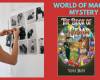
Vidya Math’s “The Book of Gems” emerges as a captivating new entry in the magical fantasy genre, serving as the much-anticipated sequel to her earlier work, “The Book of Stamps.” While the first novel introduced readers to the enchanting world of Zohor through the innocent eyes of a little girl named Othelia, this new installment delves into a more mature and introspective chapter of her life.

The Asian Review Sinhala offers Sri Lankan authors a prestigious weekly literary platform in Gampaha. Submit 6 weeks before your desired event date with video clips, author photos, and biography to theasianreviewsinhala@gmail.com. All events are free and open to authors regardless of location, publishing history, or reputation.

After two years in Sri Lanka, The Asian Review Sinhala transitions into an independent literary platform under The Asian House of Literature. Meet our dynamic new team—Rasika Solanga arachchi (Country Coordinator), Pathum Punchihewa (Lead Moderator), and Oshini Jayarathna (Creative Coordinator)—as we continue fostering Sri Lanka’s vibrant literary community.


 The Asian Review