
There is something quietly radical about standing in the Cour de l’Hôtel de Ville de Bruxelles and holding up your phone to find a sculpture blooming in the air before you. No […]
There is something quietly radical about standing in the Cour de l’Hôtel de Ville de Bruxelles and holding up your phone to find a sculpture blooming in the air before you. No […]
After five years and 85,000 daily readers, The Asian Review strips away all images, adopts black-on-cream minimalism, and mandates 900-word minimums. Our globally trademarked black logo signals permanence: we’re desensitising readers from image-focused clicking, resensitising them to sustained thought. Not algorithm-chasing, but resistance training for attention itself. Literary culture demands depth.

IndiGo’s catastrophic meltdown has devastated India’s literary festival season. International authors stranded for days in chaotic airports, keynote speeches cancelled, cross-border dialogues destroyed. Over 1,000 flights grounded—not by technology, but by shocking mismanagement and greed. India’s cultural reputation lies in ruins as the world’s writers witness our aviation nightmare firsthand.

When this opportunity to visit Belgium came along, I couldn’t think of a better adventure than to make this ‘pilgrimage’ to Geel. It didn’t matter that I couldn’t enter the church since it was closed for the winter because what I came to see was on the outside – the bas-relief depicting the beheading of Dymphna. Wouldn’t it have been more apt if Damon was holding the chopped-off head of Dymphna? Just saying…

The Asian Prizes announces five shortlisted stories for The Asian Prize for Short Story 2025. Selected from submissions across four continents by an international evaluation panel, these narratives from Singapore and India showcase compelling voices in contemporary literature. The winner will be revealed on 31st December 2025.

Hungarian novelist László Krasznahorkai has been awarded the 2025 Nobel Prize in Literature for his apocalyptic vision and distinctive prose style. Known for sentences that run for pages, the 71-year-old becomes Hungary’s second Nobel laureate in literature, following Imre Kertész who won in 2002.

The Asian Review Sinhala offers Sri Lankan authors a prestigious weekly literary platform in Gampaha. Submit 6 weeks before your desired event date with video clips, author photos, and biography to theasianreviewsinhala@gmail.com. All events are free and open to authors regardless of location, publishing history, or reputation.

After two years in Sri Lanka, The Asian Review Sinhala transitions into an independent literary platform under The Asian House of Literature. Meet our dynamic new team—Rasika Solanga arachchi (Country Coordinator), Pathum Punchihewa (Lead Moderator), and Oshini Jayarathna (Creative Coordinator)—as we continue fostering Sri Lanka’s vibrant literary community.
The Asian Prizes announces the long list for the inaugural Asian Prize for Poetry 2025, featuring ten works from nine countries exploring the theme “The Earth.” The international jury, chaired by Ukrainian poet Iryna Vikyrchak, selected diverse voices spanning Ukraine, Indonesia, Sri Lanka, Botswana, Vietnam, India, Malaysia, and the Philippines.
The Asian Prizes has unveiled the long list for The Asian Prize for Short Story, featuring ten works from writers across India, Indonesia, and Singapore. The competition attracted hundreds of global submissions, evaluated by an international panel spanning Malaysia, India, Ukraine, and Tanzania. The shortlist announcement follows in October with winners declared by year-end.

Brussels becomes the first European city to host the Asian Literary Festival this October, marking a cultural milestone. The three-day celebration (3rd-5th October 2025) features over 30 events showcasing authors from Asia, Africa, South America, and Europe under the theme ‘Between Worlds—Reviving the Silk Route of Creative Expression’.
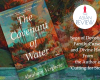
Verghese’s The Covenant of Water flows like Kerala’s monsoon rivers—patient, powerful, inevitable. Through three generations haunted by mysterious drownings, we discover how ancient wisdom meets modern medicine. This isn’t merely storytelling; it’s an immersion into lives connected by water’s eternal covenant, where individual sorrows merge into humanity’s greater current.

In early 20th-century New York, revolutionary artists abandoned fancy subjects to capture gritty, unvarnished American life. The Ashcan School painted tenements and taverns instead of Fifth Avenue socialites, earning the nickname “apostles of ugliness.” This democratic movement proved ordinary struggles deserved the highest artistic treatment, transforming how America saw itself.

New York is a strategically important place on the Donbas front line, the site of a defensive fortification on Ukraine’s Mannerheim Line. There is constant fighting here, as a result of which its material form is inexorably disappearing from the face of the earth. Russian bombs have annihilated its economic potential.

Nigerian writers were not simply responding to Western literature or colonial narratives; they were creating distinctly Nigerian literary traditions that demanded recognition on their own terms. Their success demonstrated that African stories held universal appeal when presented without compromising their cultural specificity.

The Asian Review, in collaboration with The Asian Prizes, proudly presents The Asian Writing Lab—an ambitious series of interconnected articles designed to nurture and elevate emerging literary voices across the globe.

Marianna Kyanovskaya’s poetry today is one of the most important voices of struggling Ukraine. Struggling for what? After February 24, 2020, we faced the threat of a world war. We understand that the heroic sacrifice made today by Ukrainians, including poets fighting on the front lines, is done not only on behalf of the freedom of the Ukrainian people, but also in the name of the civilisation of freedom.

Kenyan author Ngũgĩ wa Thiong’o, who transformed African literature by writing in his native Gikuyu language, has died aged 87. The Nobel Prize contender, imprisoned and exiled for his political views, spent decades championing indigenous African voices. His revolutionary decision to abandon English challenged colonial literary dominance forever.

Arundhati Roy exists as literature’s most uncompromising truth-teller, a writer whose pen serves simultaneously as artistic instrument and political weapon. Her singular career trajectory—from Booker Prize-winning novelist to fearless activist-essayist—represents one of contemporary literature’s most compelling arguments for the writer as public intellectual, refusing comfortable boundaries between art and politics.

Salman Rushdie stands as one of contemporary literature’s most significant voices, fundamentally reshaping postcolonial narrative through magical realism. His masterpiece Midnight’s Children weaves personal and political history, creating a distinctive fusion of Eastern and Western storytelling that captures the complexity of cultural displacement and hybrid identity in our globalised world.


 The Asian Review