Andrei Kurkov has never left Kyiv. While the world argued about Ukraine from a safe distance, he stayed — watching, writing, turning the daily reality of war into literature with the patience […]
Andrei Kurkov has never left Kyiv. While the world argued about Ukraine from a safe distance, he stayed — watching, writing, turning the daily reality of war into literature with the patience […]

Brussels becomes the first European city to host the Asian Literary Festival this October, marking a cultural milestone. The three-day celebration (3rd-5th October 2025) features over 30 events showcasing authors from Asia, Africa, South America, and Europe under the theme ‘Between Worlds—Reviving the Silk Route of Creative Expression’.

In early 20th-century New York, revolutionary artists abandoned fancy subjects to capture gritty, unvarnished American life. The Ashcan School painted tenements and taverns instead of Fifth Avenue socialites, earning the nickname “apostles of ugliness.” This democratic movement proved ordinary struggles deserved the highest artistic treatment, transforming how America saw itself.
Nigerian writers were not simply responding to Western literature or colonial narratives; they were creating distinctly Nigerian literary traditions that demanded recognition on their own terms. Their success demonstrated that African stories held universal appeal when presented without compromising their cultural specificity.
Marianna Kyanovskaya’s poetry today is one of the most important voices of struggling Ukraine. Struggling for what? After February 24, 2020, we faced the threat of a world war. We understand that the heroic sacrifice made today by Ukrainians, including poets fighting on the front lines, is done not only on behalf of the freedom of the Ukrainian people, but also in the name of the civilisation of freedom.
In recent decades, Korean literature has emerged from relative obscurity to claim its rightful place on the world stage, bringing with it distinctive narrative approaches, thematic concerns, and aesthetic sensibilities that have significantly expanded the palette of global literature
The story of how South Asian writers claimed their space in global English literature represents one of the most successful cultural appropriations in literary history. By transforming a colonial imposition into a medium for decolonial expression, these writers have not merely secured recognition but have fundamentally altered the landscape of English literature itself.

Oksana Zabuzhko’s groundbreaking novel ‘Field Work in Ukrainian Sex’ addressed gender issues and national trauma, while Yuri Andrukhovych’s ‘Recreations’ explored Ukraine’s cultural positioning between Eastern and Western influences. Serhiy Zhadan’s poetry and prose captured the gritty realities of post-Soviet transition, particularly in eastern Ukraine.

Ukraine’s rich literary heritage suffered systematic suppression under Soviet rule. The policy of Russification meant that Ukrainian writers were often forced to write in Russian or face severe consequences. The “Executed Renaissance” of the 1920s-30s saw an entire generation of Ukrainian intellectuals and writers eliminated through Stalin’s purges.

What is needed now would be to formulate long-term strategies to avoid such a crisis from happening again and to establish ironclad food security for the country. There are a few thoughts towards this end.
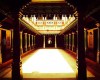
What is evident is that walauwas were the houses of the Kandyan chieftains and the Low Country mudaliars. In contrast, the average citizen’s home was known as a ‘pela’, ‘palpatha‘, ‘maduwa‘, ‘kutiya‘ or ‘geya‘. The home of the village chief, the native doctor, vidane arachchi, mudalali, and so on was the ‘gedara’.


 The Asian Review