
After five years and 85,000 daily readers, The Asian Review strips away all images, adopts black-on-cream minimalism, and mandates 900-word minimums. Our globally trademarked black logo signals permanence: we’re desensitising readers from image-focused clicking, resensitising them to sustained thought. Not algorithm-chasing, but resistance training for attention itself. Literary culture demands depth.
When Democracy Drowns: The Terrifying Prescience of Prophet Song
10:52Paul Lynch’s Booker Prize-winning Prophet Song is a literary gut-punch that transforms contemporary Dublin into a totalitarian nightmare. This isn’t escapist fiction—it’s a mirror held up to our fragile democracies, asking the most terrifying question: how would you know when it’s time to leave?
Dabi Aas (Diary) by Shaikh Sarafat Ali: A Chronicle of Youthful Expectations and Emotional Turmoil

Shaikh Sarafat Ali’s debut Hindi novel, Dabi Aas (Diary), is a profoundly introspective work that captures the subjective emotional landscape of contemporary Indian youth navigating the treacherous waters of love, ambition, and […]
A Warm and Witty Return: Catherine Newman’s “Wreck” Delivers More of What Made “Sandwich” Irresistible

Catherine Newman’s “Wreck” brings back beloved narrator Rocky for a funnier, more poignant sequel. Facing a health scare and local tragedy in western Massachusetts, Rocky navigates family life with Nora Ephron-esque wit. Newman brilliantly blends domestic comedy with meditations on mortality, creating intelligent comfort reading that resonates deeply.
Hungarian Writer László Krasznahorkai Wins 2025 Nobel Prize in Literature

Hungarian novelist László Krasznahorkai has been awarded the 2025 Nobel Prize in Literature for his apocalyptic vision and distinctive prose style. Known for sentences that run for pages, the 71-year-old becomes Hungary’s second Nobel laureate in literature, following Imre Kertész who won in 2002.
The 2025 Booker Prize Shortlist: ‘Novels for Grown-ups…’

The 2025 Booker Prize shortlist champions literary maturity over novelty, featuring established authors including previous winner Kiran Desai. These six novels explore identity uncertainty and family disruption, from Susan Choi’s multi-generational Flashlight to Katie Kitamura’s thought-provoking Audition. Though predominantly middle-age narratives, they’re anything but safe or comfortable reading.
The Asian Review Sinhala: Meet Our New Team as We Enter Our Third Year

After two years in Sri Lanka, The Asian Review Sinhala transitions into an independent literary platform under The Asian House of Literature. Meet our dynamic new team—Rasika Solanga arachchi (Country Coordinator), Pathum Punchihewa (Lead Moderator), and Oshini Jayarathna (Creative Coordinator)—as we continue fostering Sri Lanka’s vibrant literary community.
In-Depth Analysis: Deceptive Murders by Amitav Ganguly
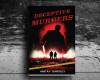
“Deceptive Murders” is an engaging, fast-paced crime mystery with deceptive twists and a reader-friendly structure. It excels as a focused page-turner, ideal if you enjoy concise thrillers that keep you guessing.
Before The Genocide

Today marks the International Day of Remembrance of the Genocide in Srebrenica, commemorating the victims of this atrocity. The UN General Assembly adopted the resolution establishing 11 July as this day of remembrance in May 2024, despite opposition from Serbia, China, Russia, Belarus, and Nicaragua.
Sri Lankan Author Shehan Karunatilaka Wins Eighth Émile Guimet Prize for Asian Literature
Sri Lankan author Shehan Karunatilaka has won the eighth Émile Guimet Prize for Asian Literature for “Les sept lunes de Maali Almeida.” The Booker Prize winner’s novel beat strong competition from Chinese and Korean works. The ceremony also launched the inaugural Inalco Student Prize for Manga, expanding recognition of Asian literary forms.
Under the Eye of the Big Bird: A Haunting Vision of Humanity’s Twilight
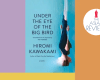
Mieko Kawakami’s Under the Eye of the Big Bird defies categorisation as part novel, part interlinked stories. Set in humanity’s distant future, this ambitious work explores extinction through fragmented narratives that gradually coalesce. Despite its bleak premise, moments of love and humour shine through, creating something genuinely original and haunting.
” What does get in the way is chores, projects and anything that breaks the routine ” Buchi Ramagopal

” And this reminds me of a quote attributed to Toni Morrison which goes something like “If there is a book you want to read, but it hasn’t been written yet, then you must write it”.
The Asian Book Eye…

The Asian Book Eye is committed to amplifying the voices that have been marginalised, overlooked, or deliberately silenced across the vast tapestry of Asian literary communities, from South Asian powerhouses to East Asian markets, from Southeast Asian emerging voices to Central Asian storytellers whose narratives rarely cross borders.
The Uncompromising Vision of Han Kang: Excavating the Depths of Human Trauma

Han Kang’s literary landscape is one where beauty and brutality coexist in uncomfortable proximity, where the body becomes both canvas and battlefield for psychological and historical trauma. Her prose, marked by crystalline precision that renders the unbearable tangible, transforms collective wounds into universal meditations on human existence.
The Asian Review Sinhala Charts New Course with International Partnerships

As The Asian Review Sinhala prepares to enter this new phase on 1st June 2025, it stands as a testament to the enduring value of literature and the importance of community-driven cultural initiatives. In choosing independence and forging international partnerships, the publication is not merely ensuring its own sustainability but is actively contributing to the enrichment of Sri Lanka’s literary landscape.
The Prophetic Voice: Paul Lynch and the Literature of Collapse
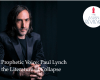
Paul Lynch occupies a singular position in contemporary Irish literature—a writer who has consistently pushed against the boundaries of conventional storytelling to excavate the darkest corners of human experience. His 2023 Booker Prize victory for Prophet Song represents acknowledgement of a literary project building momentum for over a decade.
Love, Loss, and the Scars of War: Chimamanda Adichie’s Masterful Portrait of a Nation Divided
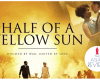
Chimamanda Ngozi Adichie’s “Half of a Yellow Sun” stands as one of the most compelling and devastating literary works to emerge from postcolonial African literature, offering readers an unflinching examination of the Nigerian Civil War through the interconnected lives of characters whose personal struggles mirror the broader tragedy of a nation tearing itself apart.
” My imagination took me all over the world, to different periods in time ” Aruna Roy

When you are fighting for livelihood and life, the language and idioms acceptable are those used by power structures and governments.
The Perfect Life by Khushboo Shah

I sat in the graveyard, merging effortlessly in the background. When you have crossed your seventies, and you have mastered the art of sitting quietly without taking much interest in your surroundings, letting the hours slip away, it is easier to overlook you. In my case, I was worried the occasional visitor to the graveyard might think I was one of the inhabitants, taking a stroll to free their legs, cramped from lying in the grave for too long!
The Embodied Vision: Sulaiman Addonia’s Literary Craft

Addonia’s emphasis on the body as the primary site of both oppression and liberation distinguishes his approach. Unlike the cool intellectual distance that characterizes much postcolonial critique, Addonia insists on the primacy of physical experience.


 The Asian Review