
Tag: #literature

Kenyan Literary Icon Ngũgĩ wa Thiong’o Dies at 87

Kenyan author Ngũgĩ wa Thiong’o, who transformed African literature by writing in his native Gikuyu language, has died aged 87. The Nobel Prize contender, imprisoned and exiled for his political views, spent decades championing indigenous African voices. His revolutionary decision to abandon English challenged colonial literary dominance forever.

The Fierce Voice of Conscience: Arundhati Roy’s Literary and Political Revolution

Arundhati Roy exists as literature’s most uncompromising truth-teller, a writer whose pen serves simultaneously as artistic instrument and political weapon. Her singular career trajectory—from Booker Prize-winning novelist to fearless activist-essayist—represents one of contemporary literature’s most compelling arguments for the writer as public intellectual, refusing comfortable boundaries between art and politics.

The Sri Lankan publishing industry operates under a persistent illusion that publishers sustain authors, rather than authors sustaining publishers.

Recognising publishers as by-products of writers’ work—as vessels for creative distribution rather than sources of creative legitimacy—would transform Sri Lanka’s literary landscape for the better. It would foster more equitable partnerships, diversify published voices, and ultimately enrich the country’s literary culture.

The Liminal Worlds of Abdulrazak Gurnah: Displacement, Memory and Colonial Legacy

The Tanzanian-born British novelist, who was awarded the Nobel Prize for Literature in 2021 “for his uncompromising and compassionate penetration of the effects of colonialism and the fate of the refugee in the gulf between cultures and continents,” crafts narratives that deftly navigate the complex terrain of displacement, cultural identity, and the lingering shadows of empire.

The Asian Book Eye…

The Asian Book Eye is committed to amplifying the voices that have been marginalised, overlooked, or deliberately silenced across the vast tapestry of Asian literary communities, from South Asian powerhouses to East Asian markets, from Southeast Asian emerging voices to Central Asian storytellers whose narratives rarely cross borders.

The Language of Resistance: How South Asian Writers Claimed Their Space in Global English Literature

The story of how South Asian writers claimed their space in global English literature represents one of the most successful cultural appropriations in literary history. By transforming a colonial imposition into a medium for decolonial expression, these writers have not merely secured recognition but have fundamentally altered the landscape of English literature itself.

The Asian Review Sinhala Charts New Course with International Partnerships

As The Asian Review Sinhala prepares to enter this new phase on 1st June 2025, it stands as a testament to the enduring value of literature and the importance of community-driven cultural initiatives. In choosing independence and forging international partnerships, the publication is not merely ensuring its own sustainability but is actively contributing to the enrichment of Sri Lanka’s literary landscape.

Ukraine and Asia: Missed Opportunities and Future Prospects for Cultural and Literary Exchange

Oksana Zabuzhko’s groundbreaking novel ‘Field Work in Ukrainian Sex’ addressed gender issues and national trauma, while Yuri Andrukhovych’s ‘Recreations’ explored Ukraine’s cultural positioning between Eastern and Western influences. Serhiy Zhadan’s poetry and prose captured the gritty realities of post-Soviet transition, particularly in eastern Ukraine.

In its totality, ‘Contours of Him’ brings remarkable depth to our understanding of men and their bodies

‘Contours of Him’ brings remarkable depth to our understanding of men and their bodies, helping to redefine masculinity in ways that are more compassionate, complex, and authentic. By inviting readers into intimate relationships with the physical male form as experienced across diverse cultures, this anthology advances our collective conversation about gender and embodiment

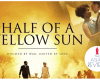
Love, Loss, and the Scars of War: Chimamanda Adichie’s Masterful Portrait of a Nation Divided

Chimamanda Ngozi Adichie’s “Half of a Yellow Sun” stands as one of the most compelling and devastating literary works to emerge from postcolonial African literature, offering readers an unflinching examination of the Nigerian Civil War through the interconnected lives of characters whose personal struggles mirror the broader tragedy of a nation tearing itself apart.

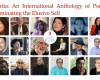
Anatta: An International Anthology of Poetry Illuminating the Elusive Self

The title Anatta, a Pali word meaning “not-self,” points towards a central theme in the anthology: the impermanence of all things, including the self. Buddhist philosophy challenges the notion of a fixed, unchanging self. Anatta proposes instead a fluid, ever-changing entity, constantly shaped by our experience as a body-mind (Nama-Tula) and the world in which it lives.