

International Women’s Day Panel Opens the Final Day of ALF Gampaha 2026 8 March 2026 • 10.00 AM – 10.45 AM • Wet Water Resort, Gampaha When the third and final day […]
International Women’s Day Panel Opens the Final Day of ALF Gampaha 2026 8 March 2026 • 10.00 AM – 10.45 AM • Wet Water Resort, Gampaha When the third and final day […]
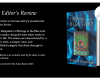
Shirani Rajapakse’s Offerings to the Blue God takes its reader along the least taken paths in the Isla’s life. The stories are characterised by a dynamic writing and presentation style, a unique voice that Rajapakshe’s stories often carry, and an unparalleled level of integrity that shines through in each story.

Themed on “Peace”, the short-story contest received a total of 72 entries from Nigeria, Kenya, Zambia, Kingdom of Eswatini, South Sudan, Zimbabwe, Poland, Malawi, The Gambia, Sri Lanka, USA, Botswana and Tanzania. The jurors include Dr. Paula O. M. Otukile (Botswana), Camilla Bauer (Sweden), Henry Akubuiro (Nigeria), Rupasinghe D. Pramudith (Sri Lanka), and Alexander Nderitu (Kenya).
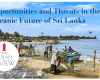
A summarised interpretation of the country’s ocean economy and marine habitat since the end of colonialism is as follows. To date, the use of the Indian Ocean has been limited to what it was used since antiquity, namely trading and fishing. Many natural riches on the oceanfront have been neglected while the communities that should have been reaping the benefits are stuck in a vicious financial cycle.

Sri Lankan politics is a thing of its own making. It is the unholy combination of good, bad, evil, and ugly. Machiavelli would have re-written “The Prince” had he had even a slight glimpse of Sri Lankan politics.

They say you should write the book you want to read. I wrote Brotherless Night because I wanted to read a book set in Jaffna during this time period—one focused on civilian lives, particularly those of Tamil women, students, teachers, and political dissidents.

What is needed now would be to formulate long-term strategies to avoid such a crisis from happening again and to establish ironclad food security for the country. There are a few thoughts towards this end.

What is evident is that walauwas were the houses of the Kandyan chieftains and the Low Country mudaliars. In contrast, the average citizen’s home was known as a ‘pela’, ‘palpatha‘, ‘maduwa‘, ‘kutiya‘ or ‘geya‘. The home of the village chief, the native doctor, vidane arachchi, mudalali, and so on was the ‘gedara’.

Just as much as the Houthis are not your ordinary rebels, the Sri Lanka navy is also not your ordinary naval force. Sri Lanka’s navy is a battle-hardened, experienced, formidable force that has proven the purpose of its existence many times throughout history for the people and the state it protects.

Goodreads Lanka recognises South Asia’s unique scenario, in which there is a remarkable majority of printed books per population, despite the troubling issues encountered by authors in terms of low pay, numerous copyright infringements, and a lack of investment from publishers.

Sri Lanka’s literary landscape has a very particular space for transalted work. Hundreads of translations are launched in this island nation by its relatively small publishing community which as a number is very insignificant compared with India and Bangladesh. However, as a percentation against the original work published in two main langauges spoken in the island nation, and the little the English writers in Sri Lanka do, translations into Sinhala records the majority.


 The Asian Review