
By Dhanuka Dickwella
” Shalini Amerasinghe Ganendra is a Sri Lankan-born noted scholar and cultural entrepreneur with a strong interesting inter-disciplinary background. She has decades of cultural programming experience including in exhibition and scholarship, with a notable focus on Sri Lanka. She is an Associate Academic of the History of Art Department and was a Visiting Scholar, at St. Catherine’s College, University of Oxford. She has also had Visiting Fellowships at the Pitt Rivers Museum and Wolfson College, the University of Oxford, and the University of Cambridge. Her seminal publication, ‘Veins of Influence’, is for everyone – general audiences, scholars, collectors, curators – and promises to open an important new chapter in our understanding of 19th-century photography in South Asia and globally.“ She has recently been awarded the Order of St. Gregory the Great in recognition of her cultural community influence, by the Vatican, Holy See. ( Order Info. https://www.veinsofinfluence.com/ ) “
1.Could you provide an overview of the book “Veins of Influence” and what inspired you to delve into this topic of early photographs of colonial Sri Lanka ?
“Veins of Influence” has been in a lifetime in the making based on a lifetime of seeing. I grew up with photographs. I have always loved photography, and that is an emphasized love. I used to develop and print my photographs in the day of analog. Photographs provided links to generational connections.
My affinity and love for ‘seeing’, whether it be art, built, or natural environments has, in many ways, directed my vocational journey and also connected me to the various cultures and communities I have entered. I have lived in numerous cities and countries, including Sri Lanka, England, America, and Malaysia. Cultural engagement has activated more learning, opportunities, and connections making each a home in different ways at different times. I am an avid family photographer and I still print out and keep photo albums, archivally arranged!
When an Oxford Professor who had followed my work invited me to take up a Visiting Fellowship (which then led to a few more), I had the opportunity to develop a scholarly framework around what was initially an insight. After reviewing 1000s of photographs, I decided on I material that needed to be shared. Thus, the idea became the book!
2.” Veins of Influence ” Why did you select this name ? What does it signify ?
It was this dynamic of connection that started me on the journey to explore the influences that operate on, through, and from a photograph. A continuing example is seeing how my children view our family photo wall which shows more than 5 generations of poses. They each have different responses. I wonder how these photographs influence their senses of purpose and belonging in the world. I asked each of them to answer that question and their answers were similar and yet distinct. I have always wanted to explore more formally, the ‘experience’ of the photograph.
3. The Book features over 450 early photographs of colonial Sri Lanka from various collections. Can you tell us about the significance of these images in the context of Sri Lankan history and the colonial period? What is the chronology of the collection ?
Images featured date from the 1860s – 1920s, and are from the: Royal Collection Trust; Pitt Rivers Museum, University of Oxford; Royal Commonwealth Society, Cambridge University Library; Royal Asiatic Society of Great Britain and Ireland; Royal Botanic Gardens, Kew; Trustees of the Rothschild Archives. In addition to these UK collections, the publication includes early photographs from important local family collections and period publications and works by Julia Margaret Cameron. The collections are mainly those of ‘influencers’ and the writing considers images by both studio photographers and hobbyists, for commercial and non-commercial purposes. Most of these images have never been published or otherwise come into the public view, until now. My approach provides perspectives that humanize the image through the nature of their collectors and their related journeys.
4. A major portion of the collection is from non Sri Lankans. On a thought provoking question ” had the collectors been Sri Lankans’ do you think they would have portrayed a vastly different British Ceylon and our histories would have been written differently ?
When you view the images in the book, you will see the difference between the local and British collections. Let me not spoil that for you.

COVER Veins of Influence – Ganendra
5. In your book, you mention the collections of “influencers.” Could you share some insights into who these influencers were and how their collections reflect the cultural and historical context of Sri Lanka during that period?
What this writing, with its words and images aims to do, is to uniquely offer a humanising approach to the image, by looking at the ways some influential collectors, both British and Sri Lankan, collected their images, applying the ‘veins of influence’ analysis. In these pages, you will see the collections of Kings, Queens and Princes, Bishops, Knights, Aristocrats and Tycoons, Travellers and Writers, Poets and Dreamers.

Julia Margaret Cameron – Ceylon Woman
6. How do you think your book contributes to the global discourse of photography and visual appreciation? What unique perspectives does it bring to the field?
The argument built around a ‘veins of influence’ analysis takes a reconstructive approach to contextualize and interpret colonial era photographs of Ceylon. This construct examines the dynamics implicit in the image and takes into account historiography, biographies of collectors and the idiosyncrasies of the social context of which are best understood by identifying for whom these photographs were intended. This analytical approach is not new; in assessing other cultural objects, this is best practice. However, recognizing how vital it is to understand these ‘veins’ when studying photographic material and that which John Berger so aptly termed ‘ways of seeing’, offers fresh methodology. This writing will also place the still unfamiliar early colonial era photography of Ceylon within a broader geographical discourse about world photography.

NRC Rothschild – Ceylon Visit 1902
7. As a cultural entrepreneur and scholar, how has your background and expertise informed your approach to curating and presenting the images in this book? As a related matter, you’ve been involved in various cultural and art-related initiatives, including Gallery Weekend Kuala Lumpur. How has your experience in these initiatives influenced the way you approach this project and its presentation?
My cultural work has always emphasised the inter-disciplinary because the premise of all projects has been to promote learning, ignite curiosity and foster understanding. The concept of veins of influence has guided my cultural and collecting journey from inception. What does that mean? A simple example – A project that develops around sustainable architecture in Malaysia could reach back to review indigenous architecture, the materiality of the environment that provided resource, the artisanal dynamic that these buildings promoted. Then the photographic documentation of the heritage building and the communities that lived there, tell us more about the photographer, the way the image was captured, the people in the image and going forward, how we interact with that image and information and how that interface affects our energies.
You can see immediately that these inquiries involve history, sustainability, architecture, design, anthropology, sociology, craft, photography – perhaps all presented through an exhibition and a series of workshops and talks. This sort of multi-faceted construct defined my cultural programming and provided content for cultural marquees like the Gallery Weekend Kuala Lumpur which I founded in 2016.
As a related point, during this research, I curated a gem of an Exhibition at the Museum of Oxford, Image & Identity, which included some of these early images, first edition publications in the Bodleian collection and commissioned contemporary works by Sujeewa Kumara (Threading Tales) that incorporated early photographs. Working in that 3-D construct for public engagement helped me to understand better how to communicate the ideas that I contemplated.
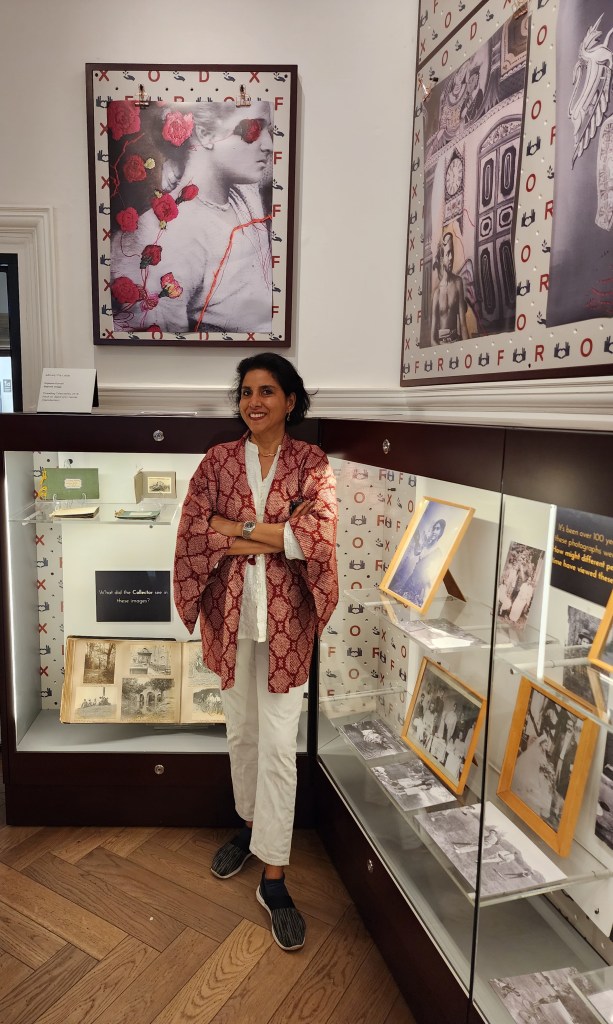
Image and Identity at MOX
8. Your work has focused on creative practices from under-recognized regions. How do these early photographs of Sri Lanka fit into this broader mission, and what cultural connections do they enable?
My hope is that this book, so beautifully designed by Neptune Publishers, in limited edition hard copy and as an eBook, will attract curators, scholars, collectors, general audience – essentially everyone – to explore the images and ideas presented in it. Necessarily, by doing so, we gain more knowledge on Sri Lanka and our impressions on Sri Lanka will ripple forward.
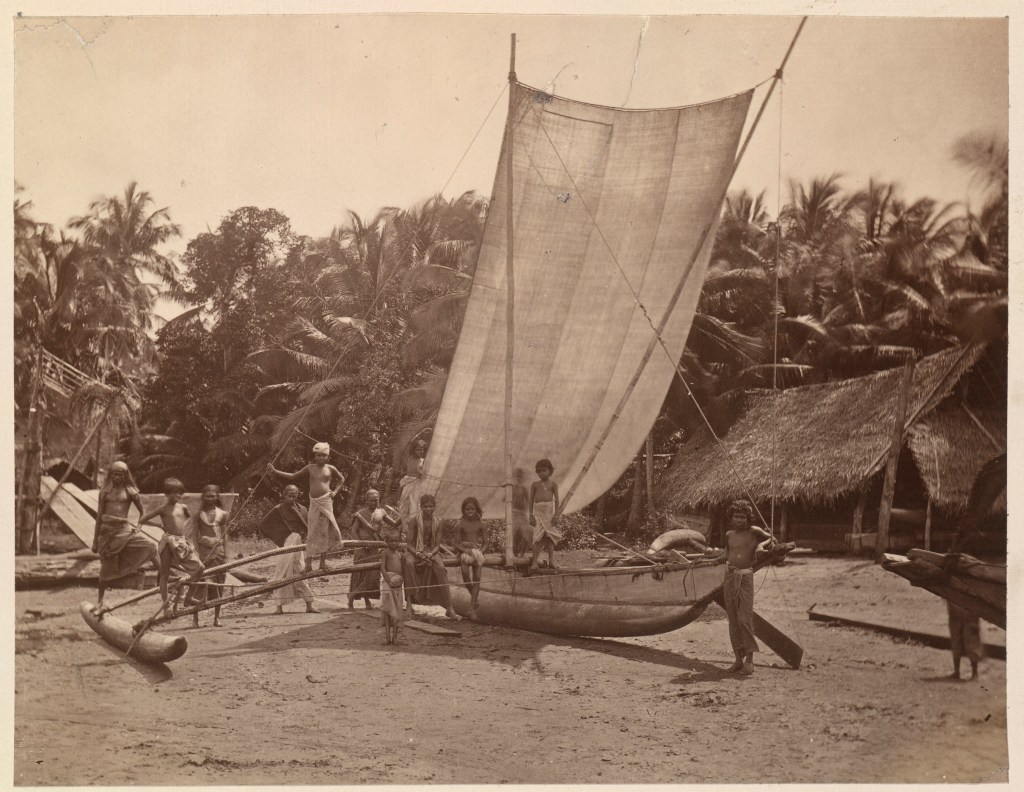
Royal Collection, Bacchante Tour 1880s
9. Your involvement in the art world goes beyond writing, including commissioning green buildings and introducing artists to international audiences. How has your multi-faceted approach impacted the cultural landscape in the regions you’ve worked in?
I have occupied the cultural sphere for a long time, during which I have seen our programmes bring people together. That comity has worked to energise further developments, including to: build bridges and networks; international exhibitions and other projects; seeing involved artists win awards and grow their futures; bringing communities together; and teaching children about the joys of art and culture. My firm belief is that – the more we share, the more successful we can all be because the synergies are exponential. Grow the pie of understanding with culture engagement and beauty, and you will grow the economics and political stability with it. The pie can be unlimited.
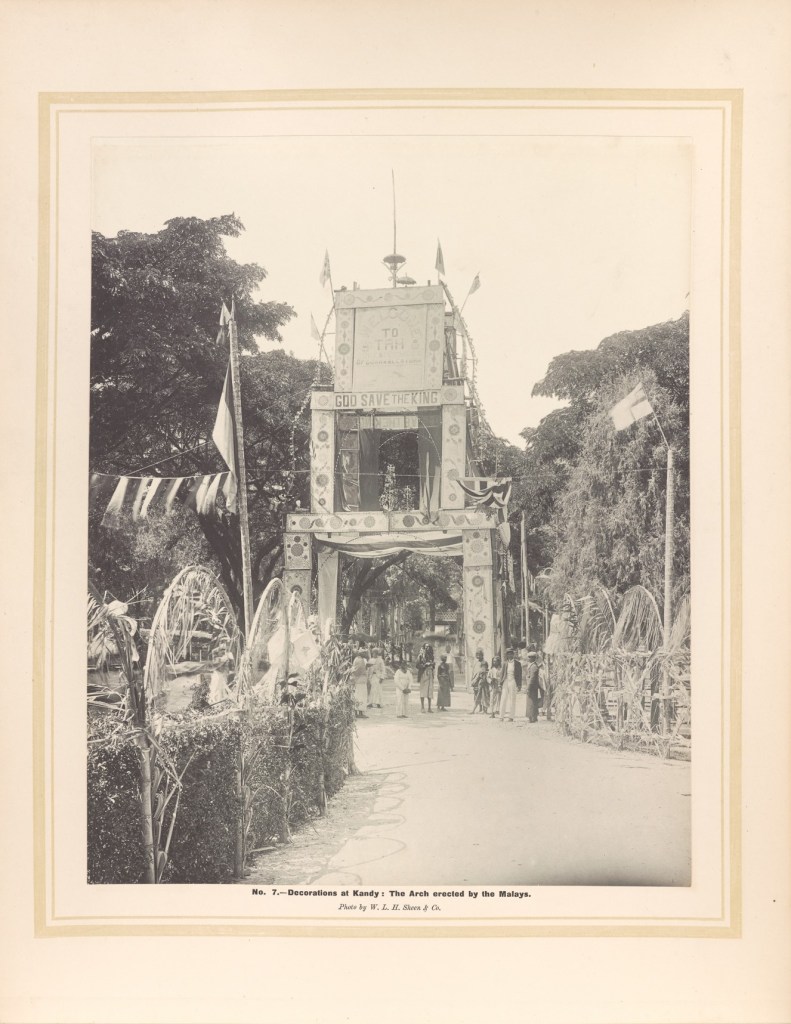
Queen Mary , Royal Commonwealth – Ceylon 1901
10. You were awarded the Order of St. Gregory by the Vatican State. How do you see your work, including this book, contributing to cross-cultural understanding and dialogue?
I am humbled by the Award and so grateful for it because of its enabling power. The driver of all that I do, is to bring better understanding to a variety of areas, including through this book which asks us to consider what operates beyond, around and in the very accessible photograph. The book asks us to consider ideas beyond the obvious.
These project I deliver also call on us to be responsible with our information; learn more about different communities with a view to strengthening mutual respect; and to be generous in our approach to sharing networks and lending support.
11. In what ways do you hope this book will inspire readers, whether they are specialists, scholars, collectors, or general audiences, to engage with the history and visual culture of colonial Sri Lanka?
Quite simply, I hope that the beauty of the book and the accessibility of the writing, will viscerally attract and engage a wide audience. Through this quality dynamic, we will see that knowledge on and admiration for Sri Lanka ripples forward. Let us consider this book another ‘vein of influence’ in bringing fuller understanding to a Sri Lankan and global image narrative.
Thank you so much!
Categories: Interviews, Life of Writers


 The Asian Review
Thank you ________________________________
LikeLike
Nice
My favorite area. Good luck!
LikeLike