
By Dash de Soysa
The walauwa was a residence of an aristocrat in the past and, according to the Sinhala Dictionary, it is derived from the Tamil or Telugu word ‘walawu’. Some also refer to it as a place of jurisdiction. The earliest sources that refer to elite residencies and residents of Lanka can be found in many ancient Brahmi inscriptions dating from about the 2nd century BCE. The ‘Prabhu ‘ (elite) of various sectors – administration, military, tax collection, navigation, ports, agriculture, infrastructure, and so on were referred to as ‘parmuka‘, and the king as ‘Mapurumukā‘. Similarly, ‘pramukha’ and ‘pramukhän’ in Sanskrit and ‘perumakan’ in Tamil also mean foremost, chief, principal, or a distinguished person. The term ‘grahapati’ (from the same era) meaning householder is perhaps the earliest recorded version of the subsequent gruha(pati), geya, and gedara, terms which are in use even today. The term derives from the Sanskrit ‘gṛha’, meaning house. Whilst subsequent literary sources also mention wasala, niwasa, and medura, there is no mention of walawwa until one comes across sources from the more recent centuries.
The ‘walawwa’, therefore, is an interesting concept, with an interesting but somewhat elusive history, displaying a variety of architectural styles, varying in grandeur and claimed by several regions and groups within Sri Lanka (particularly the Up Country). What is evident is that walauwas were the houses of the Kandyan chieftains and the Low Country mudaliars. In contrast, the average citizen’s home was known as a ‘pela’, ‘palpatha‘, ‘maduwa‘, ‘kutiya‘ or ‘geya‘. The home of the village chief, the native doctor, vidane arachchi, mudalali, and so on was the ‘gedara’.
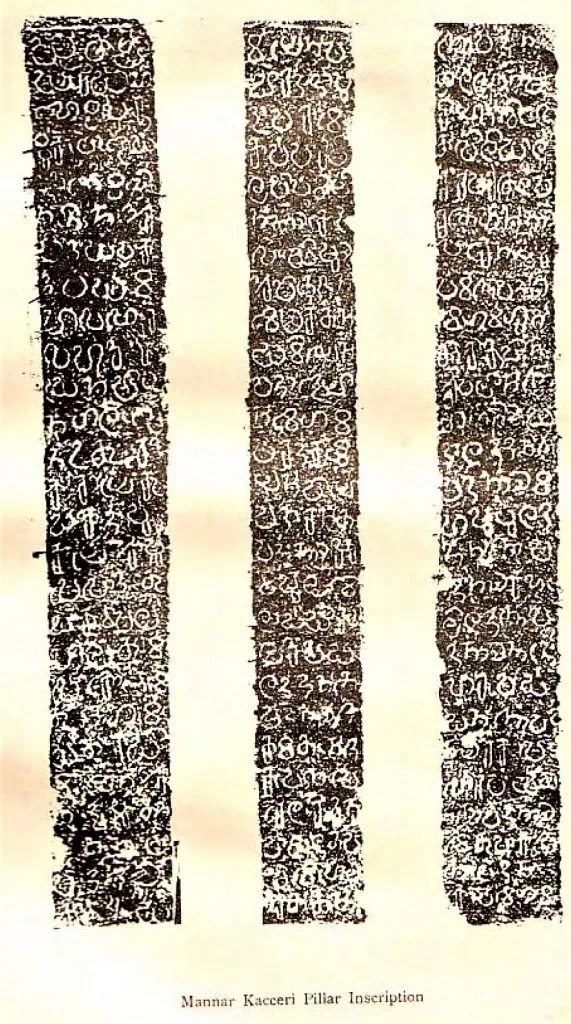
In the Kandyan kingdom, the elites were also known as “Radala” . One can also trace the evolution of this term from past inscriptions in the Sinhala script. The earliest versions were raṭladan, then radolan, deriving from the terms ‘rad/rat’ meaning district/province/kingdom and ‘lad/laddan’ meaning officer/endowed/authority over. The Mannar Kachcheri Pillar inscription of the late 9th or early 10th century (and the Mäḍirigiriya Pillar Inscription of the 10th century A.D.) refers to Raṭladu and Pasladdan (Governors/headmen of Districts and Provinces) as well as Mahaputuladdan – the Officers at Mahathiththa harbor, commissioned on behalf of the king by an Officer/Minister called Pāṇ̆ḍirad Dāpuḷa. The term Radolan appears in the mid 10th century Badulla Pillar Inscription (found near the Sorabora tank/wewa, Mahiyangana) concerning the activities of the market town of Hopitigama, it states – ”Royal officers (Radolan) who have come to the village should not receive liquor, meat, curd, or ghee; they should not enter gardens and demand toddy, and they should not be corrupt…”
Badulla Pillar Inscription

Mannar Kachcheri Pillar Inscription
TERMINOLOGY & ORIGINS
As per both oral and written accounts such as the Deepa Varnanawa (Kandyan era), the term walauwa is said to be of South Indian origin. Yet, the residencies of the Tamil-speaking elite of the North-East, or those of the related clan groups in South India use the term. Instead, there was/is the Nālukettu or Kottaram in Kerala, Manduva Logiliin in Andhra Pradesh, Guthu Mane in Karnataka, and Manai or Vīṭṭil in Tamil Nadu and the Tamil-speaking majority regions of the Island. Property granted for religious purposes to Brahmins and others to maintain temples and to sustain their families was usually known as Agrahāram (In some instances, terms such as Chaturvedi Mangalam, Ghatoka, and Boya were also used). It is also of interest that in Telugu the term ‘valavu’ means trick, secret, or stratagem – a plan or scheme. In Tamil, it means to mix water, in Kannadi it means slander and in Malayalam it is to bend, turn or twist. Also, the Sanskrit-origin term ‘adhikāra’ is the word for jurisdiction and place of jurisdiction in Telugu, Tamil, and Malayali. It is therefore evident that writers thus far had not questioned or sought to illuminate the true origins of the walauwa.
In actuality, the term ‘valavu’ was used almost exclusively by one South Indian community – the Nakarattar. Valavu literally denoted the architectural portion of the Nakarattar (Chettiar) house, consisting of a central courtyard and the surrounding ring of rooms housing each of the resident Pullis (extended family). It included the undivided family estate consisting of the extended family, the properties, and the collective business activities. It was the basic unit of Nakarattar business ownership: the Nakarattar family firm. Whilst many Chettiars in the past kept their own identity, others mixed with several different local communities. This is not always identifiable by Sinhalese names such as Hettige, Hettiakandage, Hettigoda, Hettiarachchi, etc.
Chettinadu mansion (valavu)

Many elite families of the Low Country and the Kandyan Kingdom have acknowledged their South Indian origins. There is also evidence of European and Eurasian ancestry in this segment of society. Several Low Country and European people have also achieved high office and naturalized in the Kandyan kingdom; Manuel Dias, Antonio Barreto, Don Cosmo, and Pedro De Gascon are a few examples. In the Low-Country, too, the descendants of migrants such as Nilaperumal Pandaram and Owen Ferdinandez achieved high office. It was also a very common practice for to Sinhalese take on Sinhalised names and it was not unusual for a villa to become a walauwa. In 1658, Manuel D’Andrado became Adigar of Kalutara and Walawita Korale, Shāhbandar (Port Master), and Member of the Dutch Council, and in 1879, Louis de Zoysa was made a Maha Mudaliyar. Mudaliyar appointments centered upon the loyalty and capability of the appointee and the only other absolute requirement up until the British era was the religious factor.
References to walauwas can be found in many of the family sagas that have been published over the years. The sizable Twentieth Century Impressions of Ceylon published in 1907 offers a reliable view and a cross-section into that era. Śrī Laṅkāvē Valav Nāmavaliya, a 2006 publication mentions eight (19th century) walauwas in the North and the East. However, about half of these have Kandyan names. Neither the author nor those who had critically appraised the booklet had noticed that the remainder were mostly Chetti in the Eastern province, one Muslim and a Kshatriya – all Mudaliars and one Muhandiram. In the north, a Tamil residence of a Udayar (Marava) and a Brahmin had been entered as walauwas. In addition to this, I find there is at least one other Chettiyar Valavu in Karaveddy (North). There are also rare examples of Tamil ‘walauwas’ in the South, such as the one in the plantation hills belonging to a relation of the Thondaimans. One could argue that this is not a ‘conventional’ walauwa, but the counterargument is that ‘walauwa’ originated in Tamil Nadu.
In the above-mentioned 2006 publication, the author’s view is that the Kandyan walauwas proliferated during the Nayakar era. Though this era started in 1739 with the ascent of Sri Vijaya Rajasinha, the Nayakar influence in Kandy began almost a century earlier. The earliest mention of a Nayakar on the shores of Lanka was in early 17th century Jaffna: Raghunatha Nayak – king of Tanjore and his deputy Khem Nayak Varunakulattan. The Nayak, or Naik, is a historical Indian title conferred on military generals and governors of feudal states. The Nayaka dynasties emerged during the Kakatiya dynasty and the Vijayanagara Empire. The Nayakars of Andhra Pradesh and Tamil Nadu were usually of Vaduga stock and the Vadugar connection with the Island, of course, predates the Nayakars.
In the kingdom of Kandy, it was the residence of the Adikaram, Dissaves, and the Rate Mahathayas, that were referred to as a walawwa and not the next tier (for example, Kivule-gedara Mohottala – initiator of the 1818 rebellion/war of independence). In the low country, these were typically the residencies of the Mudaliyars. The grandeur of these residencies also varied as the lands and income awarded to the Maha Mudaliyar differed greatly from the Kacheri Mudaliyar. However, during the British era, some houses of private citizens were larger and more opulent than many walauwas. This became more visible with the social mobility that became a reality with mercantile capitalism and educated professionalism, in contrast to the usual avenue of government service in former times. It’s not that there was no social mobility before, but there was a marked increase in the 19th century which gathered pace in the 20th century and up to the more recent decades. This was a natural process as it had already taken shape in Europe and countries that were colonized by European nations usually experienced this a little earlier than those that were not. Our language, religion, and genes bear witness to the migration legends and social mobility across history. Social mobility in the feudal past was usually attached to a monarch, a new monarch or dynasty, or times of intrigue and war – of which there are many examples from family histories and legends. Of course, during the early history of the Island and the kingdoms of Anuradhapura, merchant capital accumulation and maritime trade were major features that facilitated the exchange of ideas and knowledge, urbanization, the spread of religion, construction projects, colonization or settlement, and social mobility. The Mahavamsa gives a poetic rendition of the income earned from pearls, gems, and metals in financing the construction of Ruwanweliseya.
ARCHITECTURE
Nearly all existing walawwas display hybrid architecture – amalgamations of the native, south Asian, and European forms (for functional and aesthetic purposes). Strictly speaking, very little of the indigenous native forms (such as the residence of the indigenous chief in Dambana) can be seen, though there can be some similarity in terms of the material used. There is some evidence of the use of clay (wattle’n’dub) for the walls and iluk (grass) for the roofs as construction material in some of the oldest walauwas. However, influences of the Awasage can be seen in some features of many a walauwa; small wooden windows with an inner courtyard are features common to older walauwas and the larger Awasages. The Awasage (monk accommodation) found in many old Buddhist temples (and there are several forms) as well as to an extent the King’s residence (Maha Wasala) beside the Dalada Maligawa are the closest representations of residential architecture of the elite before the 16th century. In the 1957 publication ‘Sinhalese Social Organization: The Kandyan Period’ it is stated that in the oldest Kandyan walauwas, which were restricted to one floor (single-story), the walls (and even the beds/benches for sleeping) were built of clay, with minimal furniture and were somewhat gloomy. Whitewashing was by royal decree reserved for the palace and temples. The major source of lime for whitewashing walls was baked coral rock. There appear to have been occasional exceptions to the rule and the situation changed after the acceptance of George III in preference to Sri Wickrema Rajasinha.
An inner open space or courtyard is a common feature of residential architecture of the well-to-do throughout South India and is not peculiar to the Nakarattar Valavu. This, of course, is the much talked about medha-midhula. Whilst South Indian features are apparent in the older walauwas, some North Indian elements are visible in later ones – this was mainly due to its adaptation by the British for their bungalows. (Bungalow is a term derived from Bangla ghar, the Bengali term for house). From at least the medieval era, South Indian influences have become very apparent – Lankathilaka and Gadaladeniya are good examples. The Dambadeniya era Rajput contingent mentioned in the Mahavamsa was perhaps the last significant migration (influence) from North India.
In Sri Lanka, the oldest walauwas and colonial buildings usually date from the Dutch era. As such, they are often termed ‘Dutch architecture’. Yet, unlike the forts which display a lot of their innovations in fort-building, there are very few authentic Dutch architectural influences on the walauwa. These forms and styles of residential architecture are, however, very apparent in the warmer Iberian peninsula, Latin America, and other countries colonized by the Spanish and the Portuguese. One could, of course, trace the Iberian architecture to the Moors, Visigoths, Romans, and the Carthaginians.
It appears that the latter Dutch governors had built for themselves large two-storied mansions similar to those in Europe, but not others nor the natives. During the British era, there was a flurry of architectural influences and experimentation on the residential, religious, and administrative buildings of Ceylon. It changed from the existing forms to the Palladian Revival, Neoclassical, Gothic Revival, Italianate, and other styles of Europe and then to an experimental stage like the Indo-Saracenic, the Arts and Crafts movement, Modernist Architecture and to the amalgamation of some older native forms and features during the early-mid twentieth century. The mansions of the British era were in a class of their own; grander and palatial (with large glass windows, decorative ceilings, imported floor tiles, well-furnished and equipped with modern amenities, etc.). This was particularly so among the upper echelons of society, such as in the case of the Governor’s Palace (Mt Lavinia), Queen’s House (Fort), King’s Pavilion (Kandy) and Bagatelle (Kollupitiya). To date, these colonial mansions remain the official residences of the highest officials. It is apparent that there were natives who aspired to own mansions that were closer to the European (and Indian) stately homes than the local walauwas. Some natives did make that transition either through acquisition or building their own, such as in the case of Bagatelle becoming Bagathale Walawwa (circa 1860) and then Alfred House (1870), Horagolla Walawwa (circa 1900), Lakshmigiri (1910) and Richmond Castle (1910). As with the latter grand Chettinad mansions, which had names like Lakshmi Vilas, Palace, Mansion, or the House with a Thousand Windows, the Ceylonese too used elaborate European or Sanskrit names, though the common folk referred to them as ‘Walauwa’. Remarkably, the British appear to have not displayed jealous behavior – either about the natives adopting mansions similar to the European elite, the large plantations, modes of dress and transport, or about surpassing them in some instances.
In conclusion, what is evident is that the walawwa originated with some Nakarattar communities and not with other Tamil or Telugu-speaking people. Many members of this community kept their own identity, whilst others mixed with several local communities. As such, the walauwa cannot be claimed exclusively by any one community of this land, other than perhaps those that introduced it. It is acknowledged to have been the residence of the Kandyan chiefs, Low Country government officials, and elites of the recent past. Some of these elites had likely introduced it to this country and others had subsequently adopted it. Indeed, many of them have acknowledged their South Indian roots. Architecturally, these were structures that evolved with the times. What is also clear is that the walauwa was neither the beginning nor the pinnacle of elite residencies on the Island.
A word about the writer, Dash de Soysa from his own words.
I was born in Sri Lanka and had my primary and secondary education in Sri Lanka and India. Thereafter, I lived and pursued my higher studies in Australia and the United Kingdom. I have diverse interests (some of them began at a young age) such as in history, psychology and music. I try to base my reasoning on empiricism and find reality strange but usually more interesting and dynamic than fiction. I do not hold strong or partisan political, religious or philosophical views and have never voted for any party or person. This is because as the ancient Chinese text – the Tao Te Ching puts it finely; the great rulers – the people do not notice their existence; the lesser ones – they attach to and praise them; the still lesser ones – they fear them; the still lesser ones – they despise them. for where faith is lacking, it cannot be met by faith.
Categories: Articles, Culture, Social, Writers' Space


 The Asian Review